Paddle Steamers on Rhine 1919
Postcard From The Past: KD paddle steamer Borussia and a sister saloon steamer near the Hohenzollern Bridge. #
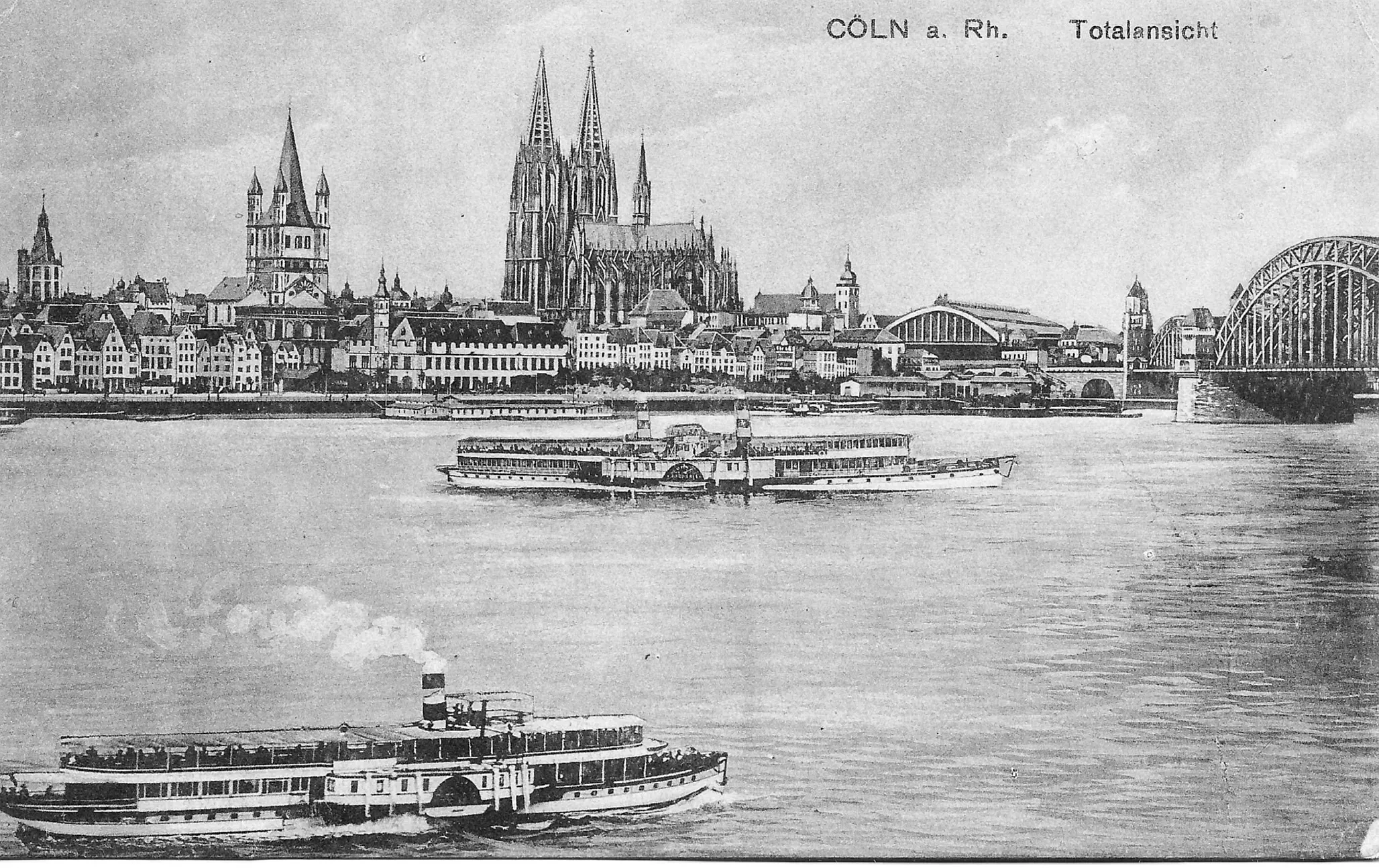
Two paddle steamers on the River Rhine circa 1919: Postcard in the Vintage Transport Collection.
Click image to enlarge
Reverse of Postcard: postmark 20 May 1919
RD Borussia #
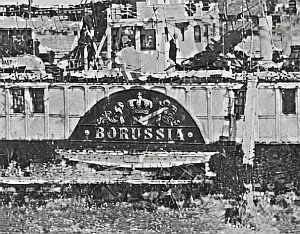 Built in 1898 by Ewald Berninghaus in Duisburg for the PRDG (Cologne), part of the Köln-Düsseldorfer (KD) operating pool.
It is Roughly 78 metres long, powered by an inclined compound steam engine driving side paddle wheels, with two tall funnels and an open foredeck.
Served as one of KD’s premier express passenger steamers (Salondampfer) on the Cologne–Mainz Rhine route from 1898 until she was retired and broken up in the late 1920s/early 1930s.
Paddle Steamer in the foreground #
The unidentified paddle steamer looks like a single funnel Köln-Düsseldorfer (KD) saloon paddle steamer (Halbsalondampfer) of the DGNM (Düsseldorf) fleet, typical of the 1903 to 1914 Rhine passenger vessels (such as Elsa, Rhein, Loreley, or Goethe).
History #
- 1816: The first steamship arrives on the Rhine from Britain.
- 3 October 1825 to 11 June 1826: Cologne merchants establish the Preußisch-Rheinische Dampfschiffahrtsgesellschaft (PRDG), receiving royal Prussian approval in June 1826.
- 1 May 1827: Regular Rhine passenger and freight paddle steamer service begins between Cologne and Mainz with the wooden side wheeler Concordia, followed later that year by the Friedrich Wilhelm.
- 1836 to 1837: A rival Düsseldorf operator, the Dampfschiffahrts-Gesellschaft für den Nieder- und Mittelrhein (DGNM), is founded, launching its first wooden paddle steamers (Herzog von Nassau and Erbgroßherzogin von Hessen) in 1837 and sparking fierce rate wars and river races.
- 9 June 1853: After years of cut throat competition, PRDG and DGNM form an operating partnership, the Köln-Düsseldorfer (KD) pool, coordinating timetables, fares, and joint fleet operations along the Rhine.
- 1898 to 1899: Ordered by PRDG for its premier Cologne–Mainz express saloon service, RD Borussia is built by the Ewald Berninghaus shipyard in Duisburg (around 78 metres in length, featuring two funnels and an inclined compound steam engine) and enters active service in 1899.
- 1900 to 1914: Borussia operates alongside a new generation of grand two funnel and single funnel saloon steamers, including Kaiserin Auguste Viktoria (1900), Kronprinzessin Cecilie (1910), Kaiser Wilhelm II (1911), Goethe (1913), and Bismarck (1914), carrying roughly two million passengers annually by 1913.
- 1914 to 1918: KD paddle steamers, including Borussia, continue limited civilian runs while being requisitioned to transport troops and wounded soldiers during wartime.
- 1921: Following post war economic disruption and Allied occupation of the Rhineland, PRDG withdraws Borussia from passenger duties and sells her for conversion into a river tug.
- 1925 to 1929: PRDG and DGNM formalize their joint management company (Köln-Düsseldorfer Rheinschiffahrts GmbH) and introduce modern post war steamers such as Rheinland (1926), Vaterland (1926), and Mainz (1929), while retiring older pre 1900 tonnage.
- 1934: After more than a decade working as a tug following her 1921 sale, the former Borussia is broken up for scrap.
- 1939 to 1945: Remaining KD paddle steamers serve as hospital and evacuation vessels; Allied bombing raids destroy nearly the entire pre war fleet of 22 steamers.
- 1946 to the present: A handful of sunken paddlers (such as Goethe, Cecilie, and Vaterland) are salvaged and rebuilt for post war tourist cruises, though rising fuel and crewing costs gradually replace steam with diesel vessels. Today, Mainz (1929) is preserved as a museum ship in Mannheim, while Goethe (1913, converted to diesel hydraulic drive in 2008) remains the last active KD paddle vessel on the Rhine.