PS Royal Eagle
Postcards From The Past: The Royal Eagle Paddle Steamer (1932) #
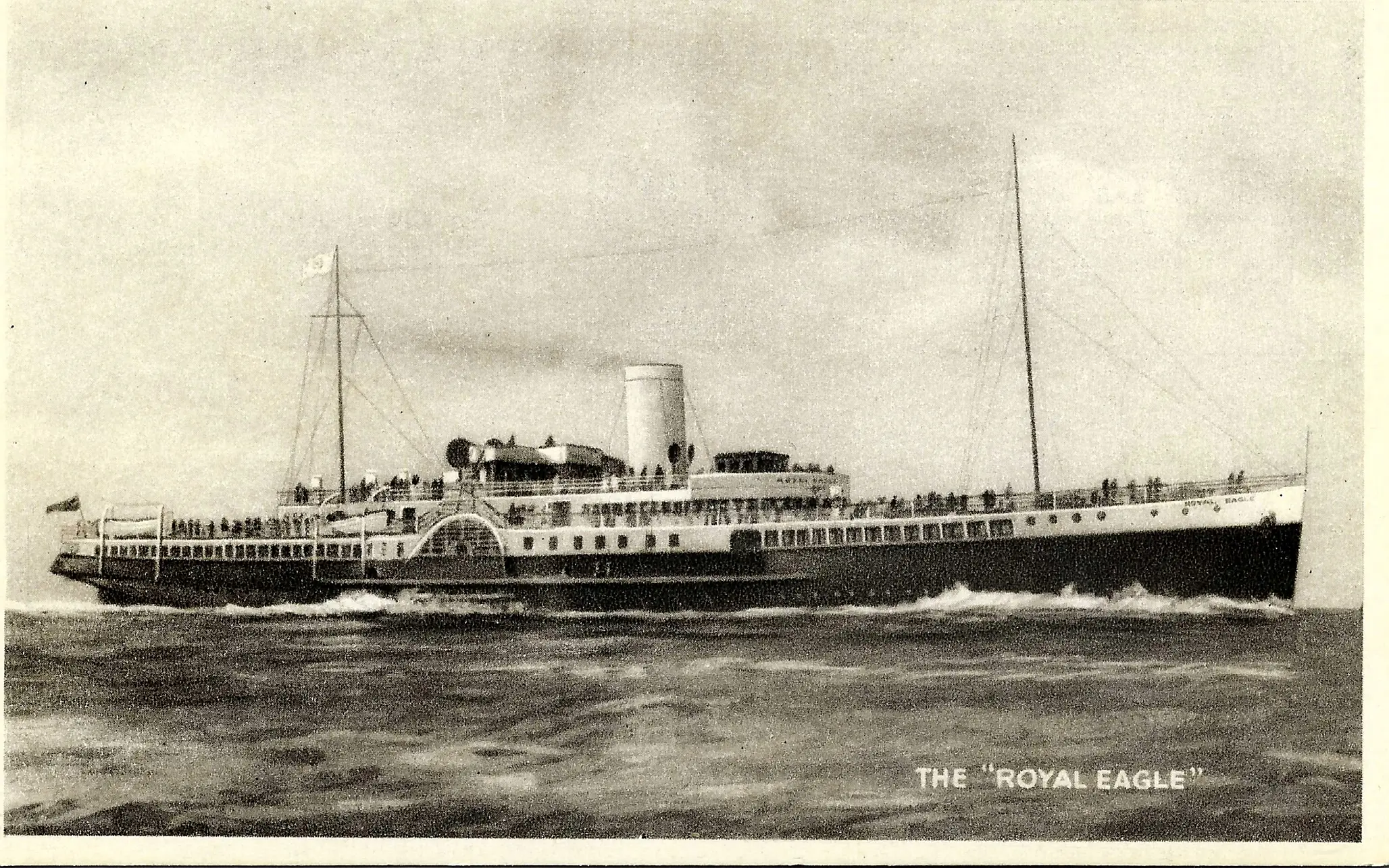
The PS Royal Eagle at sea: Postcard in the Vintage Transport Collection.
Click image to enlarge
Reverse of Postcard
The new luxury pleasure steamer Royal Eagle, built by Messrs Cammell Laird & Co for the General Steam Navigation Ltd in 1932, undergoing her trials in the Mersey. She is 1,538 tons gross, 290 ft long, 69 ft broad, 3,000 h.p. and attains a speed of 18½ knots (equal to about 21 miles per hour), oil fired and carries 1,987 passengers. From May till September she leaves Tower Pier for Southend, Margate and Ramsgate daily, except Fridays.
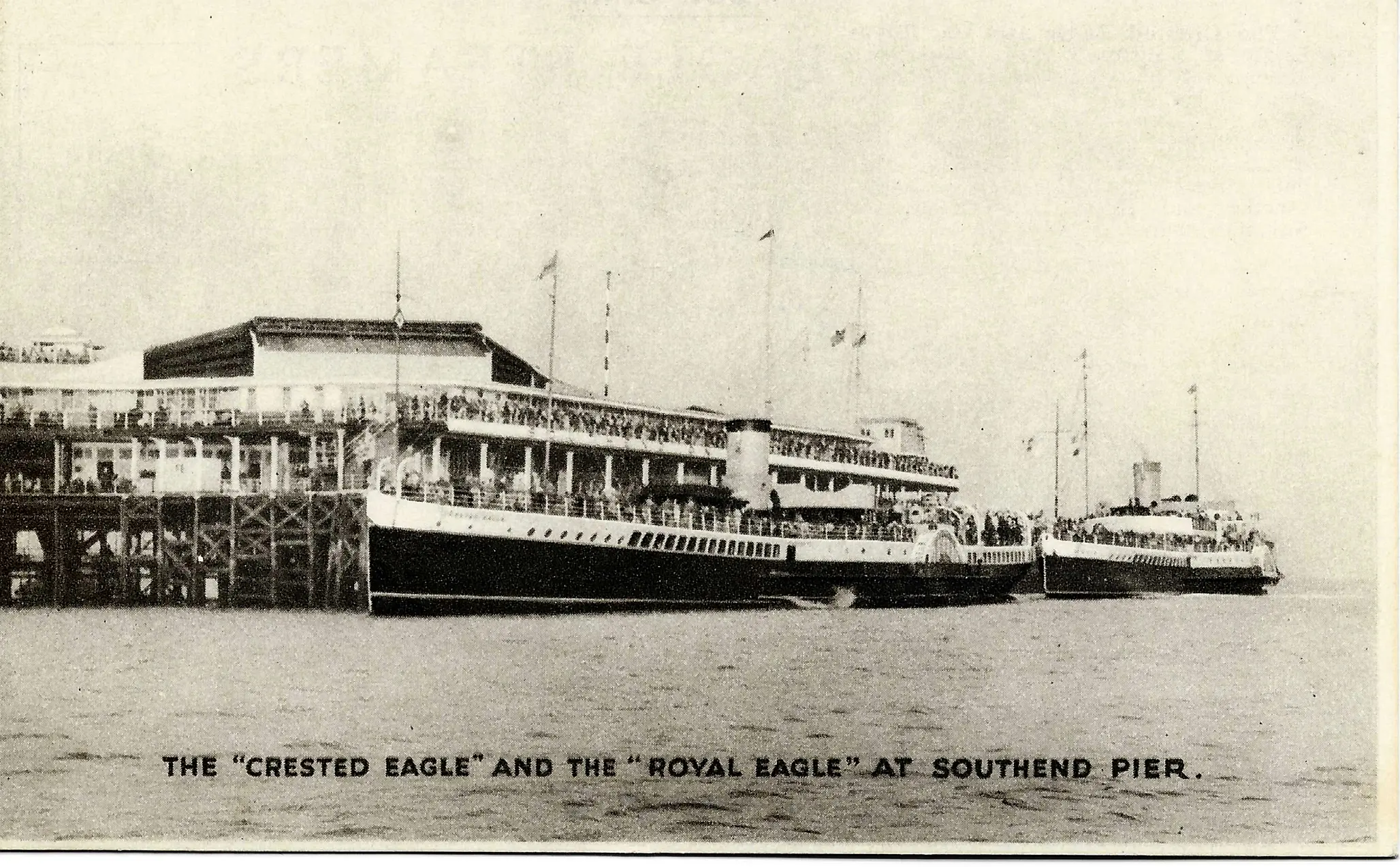
The Crested Eagle & the Royal Eagle: Postcard in the Vintage Transport Collection.
Click image to enlarge
Reverse of Postcard
The Crested Eagle and the Royal Eagle at Southend Pier: These two magnificent new vessels are the “Crack” ships of the General Steam Navigation Co. Ltd’s fleet of pleasure steamers that maintain the services from the Tower of London Pier Greenwich and N. Woolwich to Southend, Margate, Ramsgate, Clacton and Herne Bay during the Summer months.
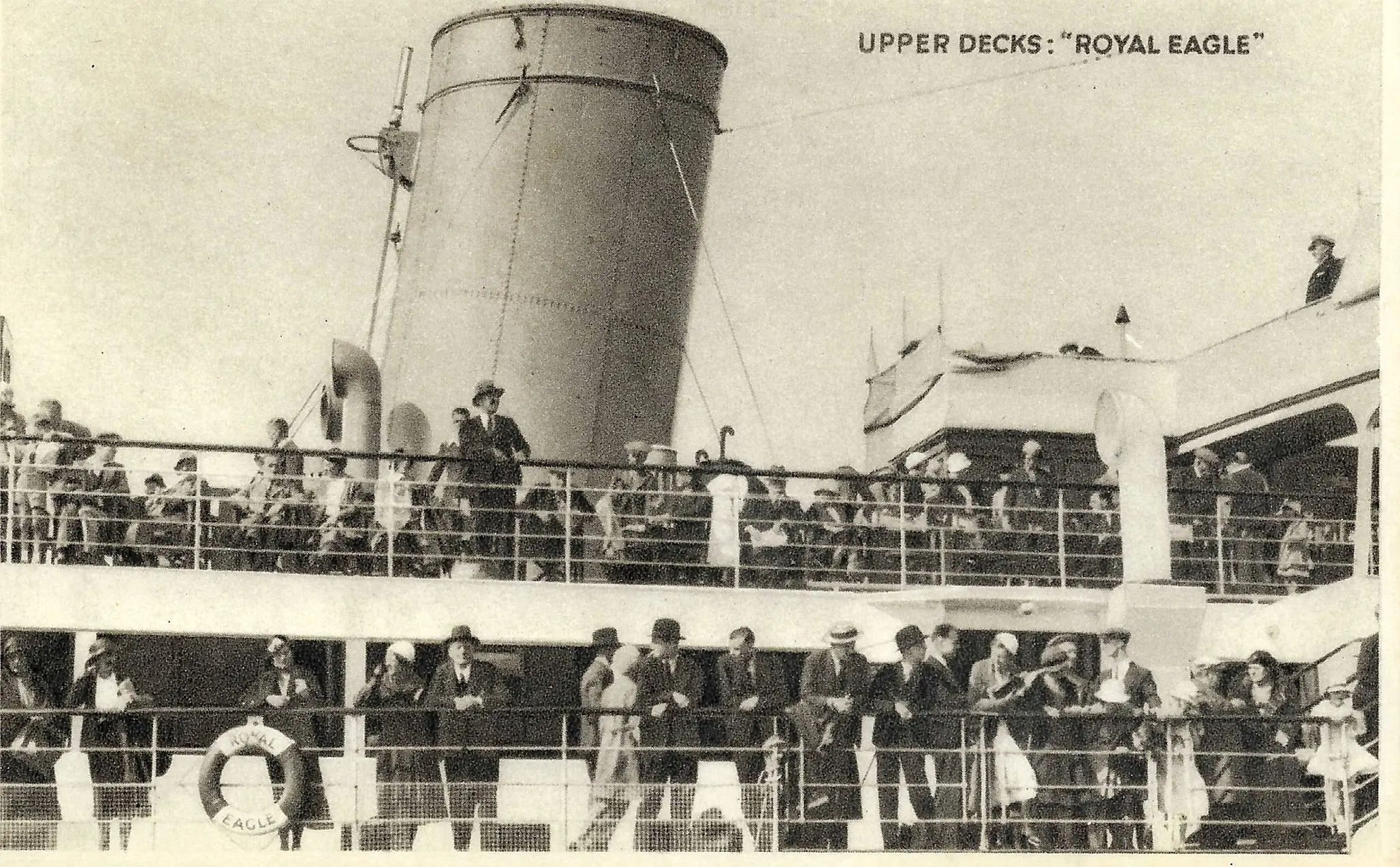
The PS Royal Eagle upper decks: Postcard in the Vintage Transport Collection.
Click image to enlarge
Reverse of Postcard
The main and Sun Decks of the Royal Eagle, the new “Crack” pleasure steamer of the General Steam Navigation Co Ltd’s coastal services from London. She is 1,528 gross and has beautiful Saloons and Dining accommodation.
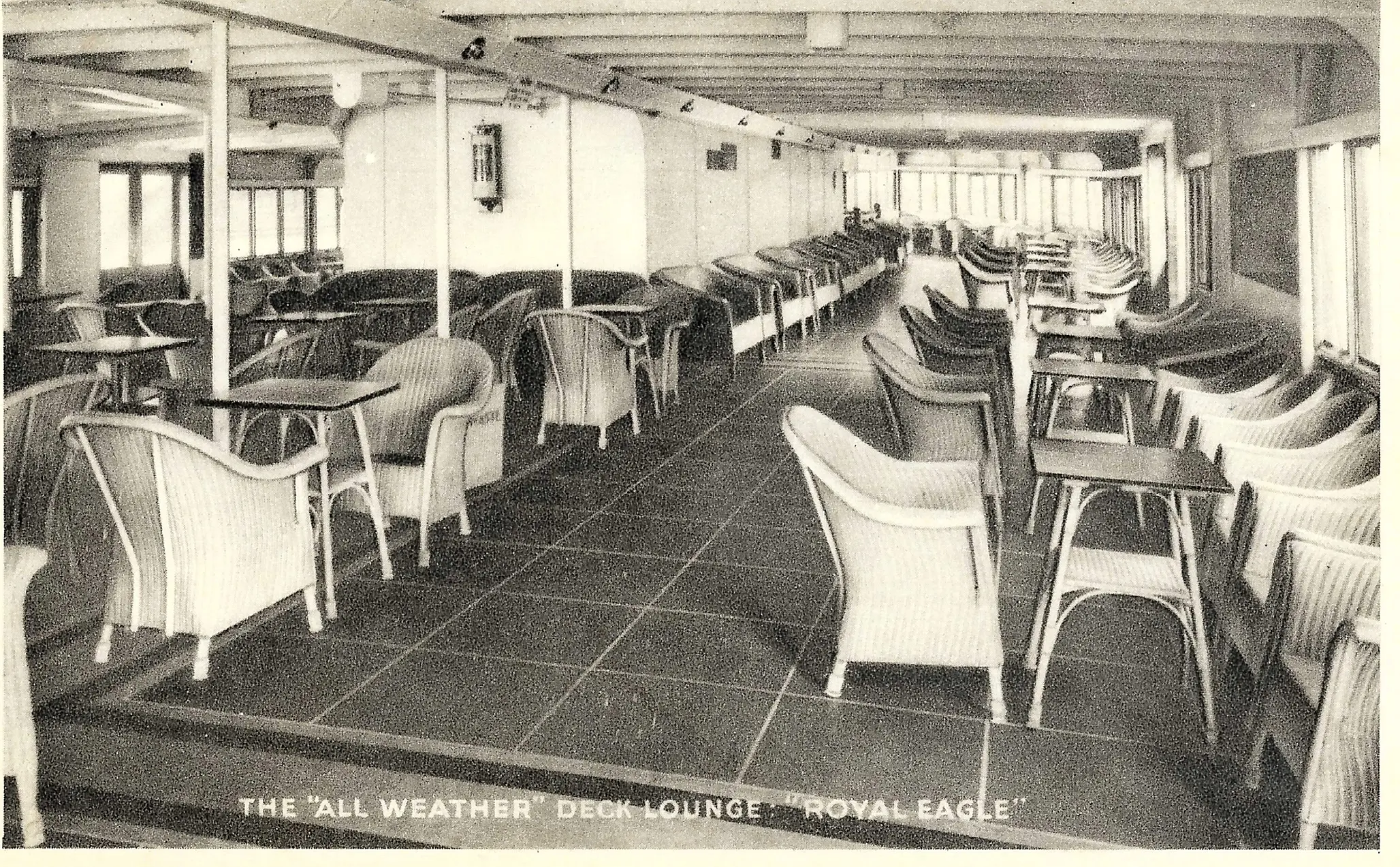
The PS Royal Eagle all weather lounge: Postcard in the Vintage Transport Collection.
Click image to enlarge
Reverse of Postcard
The Deck Lounge on the luxury Paddle Steamer Royal Eagle is a new feature that provides cool, shady accommodation in hot weather, and sheltered comfort should there be wind or rain. It is 150 ft long. The Continental Cafe atmosphere is most apparent.
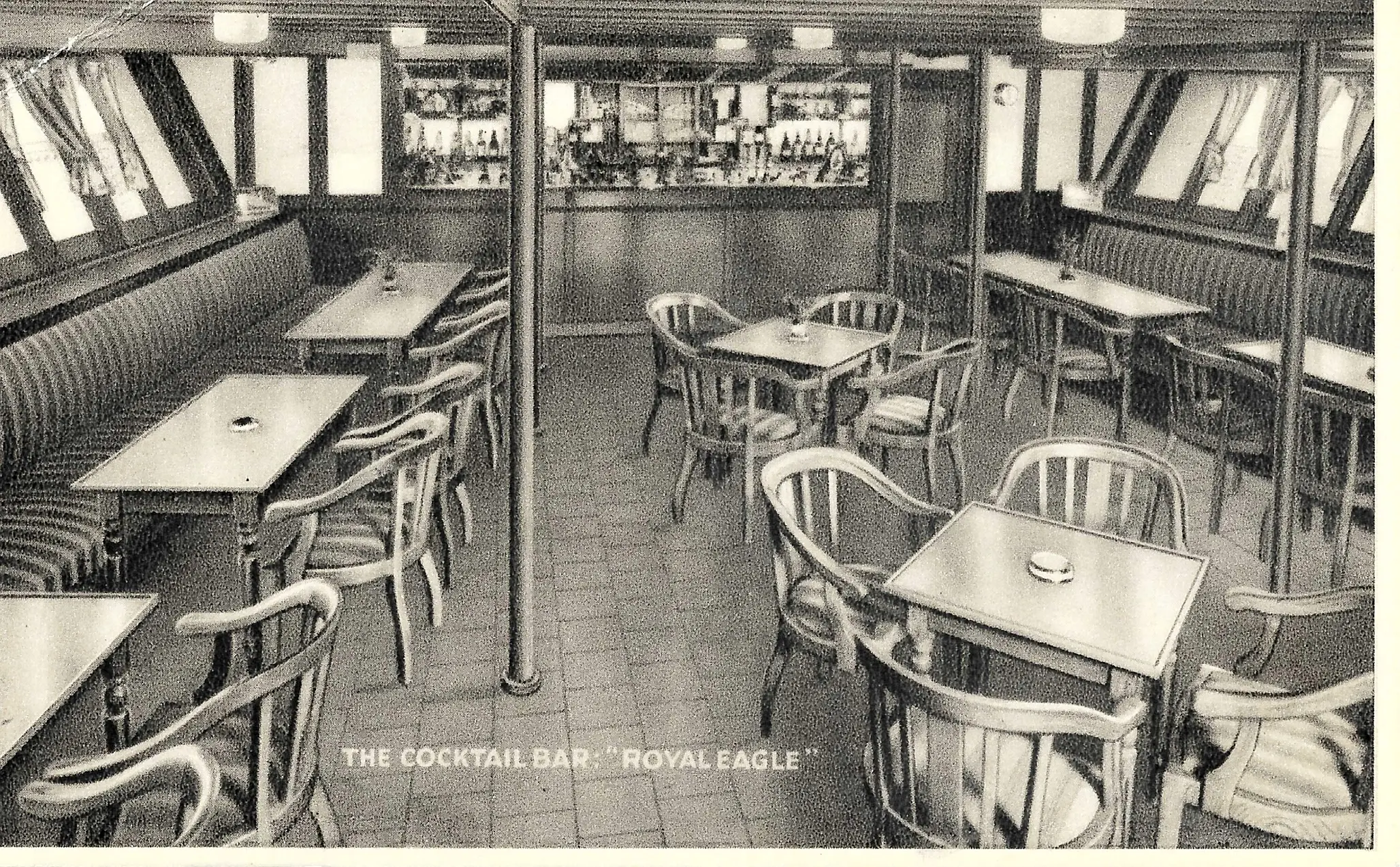
The PS Royal Eagle cocktail bar: Postcard in the Vintage Transport Collection.
Click image to enlarge
Reverse of Postcard
The “Old Time” Smoking Room on the Royal Eagle: a popular retreat for gentlemen passengers.
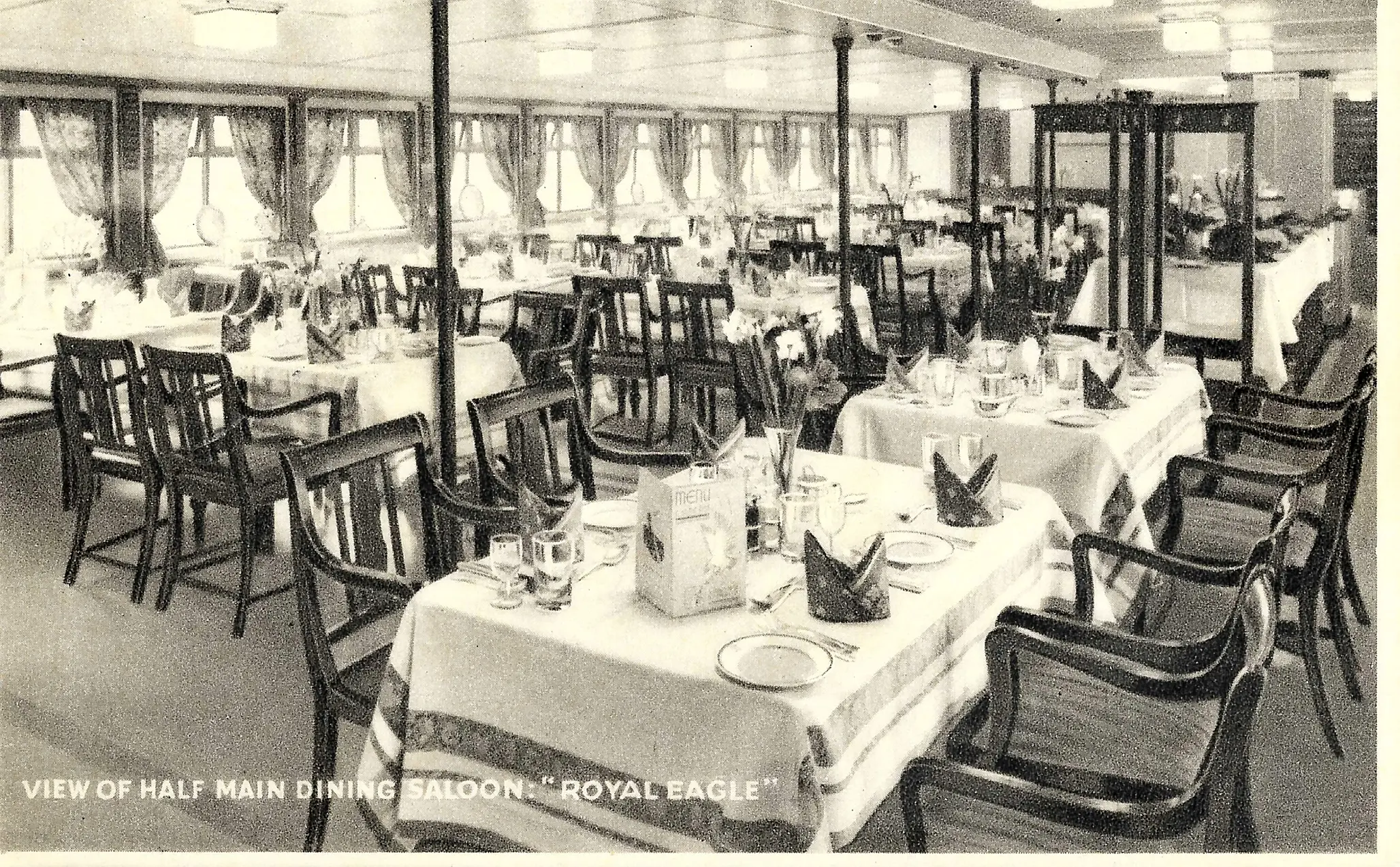
The PS Royal Eagle main dining saloon: Postcard in the Vintage Transport Collection.
Click image to enlarge
Reverse of Postcard
Dining Saloon: 322 diners can be accommodated at the same time in the Saloon of the Royal Eagle, the new luxury steamer of the General Steam Navigation Co.’s Eagle Fleet of river pleasure steamers. Excellent breakfasts, luncheons and teas at very moderate prices are served, the steamers being fully licensed. The large windows provide a wonderful view of the points of interest during the voyage.
History #
1932: Built by Cammell Laird & Co. at Birkenhead for the General Steam Navigation Company (GSN) at a gross tonnage of 1,538 tons. Measuring 290 ft with oil fired boilers and triple expansion diagonal engines capable of 18½ knots, she was the first Thames excursion paddler built with full deckhouses and carried nearly 2,000 passengers on the summer route from Tower Pier London to Southend, Margate, and Ramsgate.
September 1939: Requisitioned by the Admiralty at the outbreak of the Second World War, initially assisting with civilian evacuations from London before joining her fleet at Sheerness.
May 1940: Participated in Operation Dynamo, making three crossings to Dunkirk and successfully evacuating 2,657 Allied troops.
1940 to 1945: Commissioned as HMS Royal Eagle and served for the remainder of the war as an anti-aircraft vessel stationed in the Thames Estuary.
1946 Refitted after wartime duty and returned to GSN’s summer excursion service running between London and Margate.
1950:: Operated for just a few weeks during the peak summer season between Southend and Clacton. Following the arrival of GSN’s newer, more economical twin-screw motor vessels, she was withdrawn and laid up in the mud at Whitewall Creek on the River Medway, near Upnor in Kent.
November 1953:: Sold out of the GSN fleet for scrap in November 1953. After two unsuccessful attempts to pull her off the Medway mud,
1954: She was finally refloated and broken up.