RMS Queen Mary Postcards
Postcards From The Past: “The Stateliest Ship In The World” RMS Queen Mary #
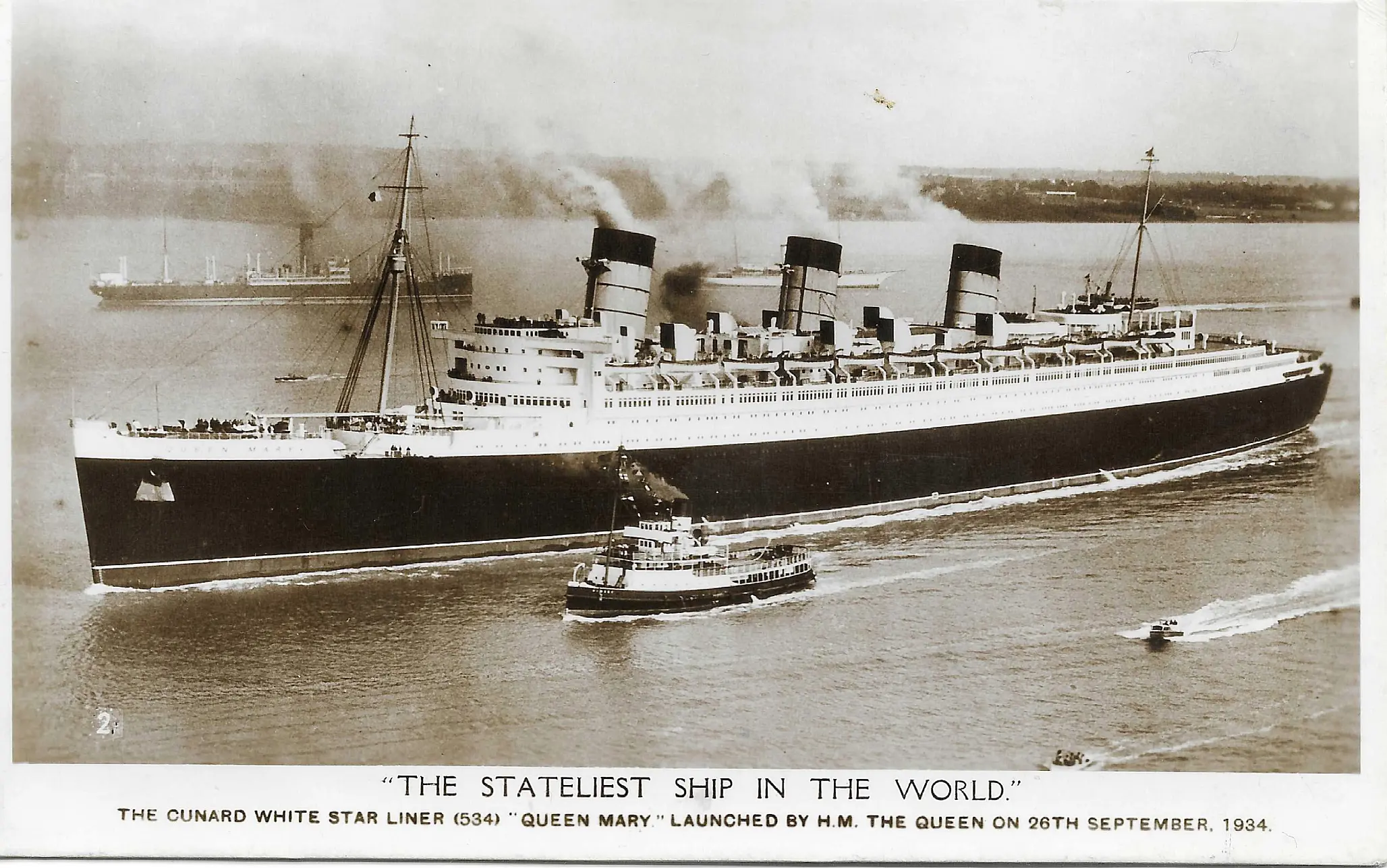
RMS Queen Mary: Postcard in the Vintage Transport Collection.
Click image to enlarge
Reverse of Postcard: postmark 21 June 1936
The Cunard-White Star Liner (534) “Queen Mary”
Gross tonnage 80,773
Length 1,018 ft.
Promenade Deck 750 ft long.
Passenger accommoation 3,500.
Driven by four sets of turbine each developing 45,000 h.p.
Maximum speed 33 knots per hour.
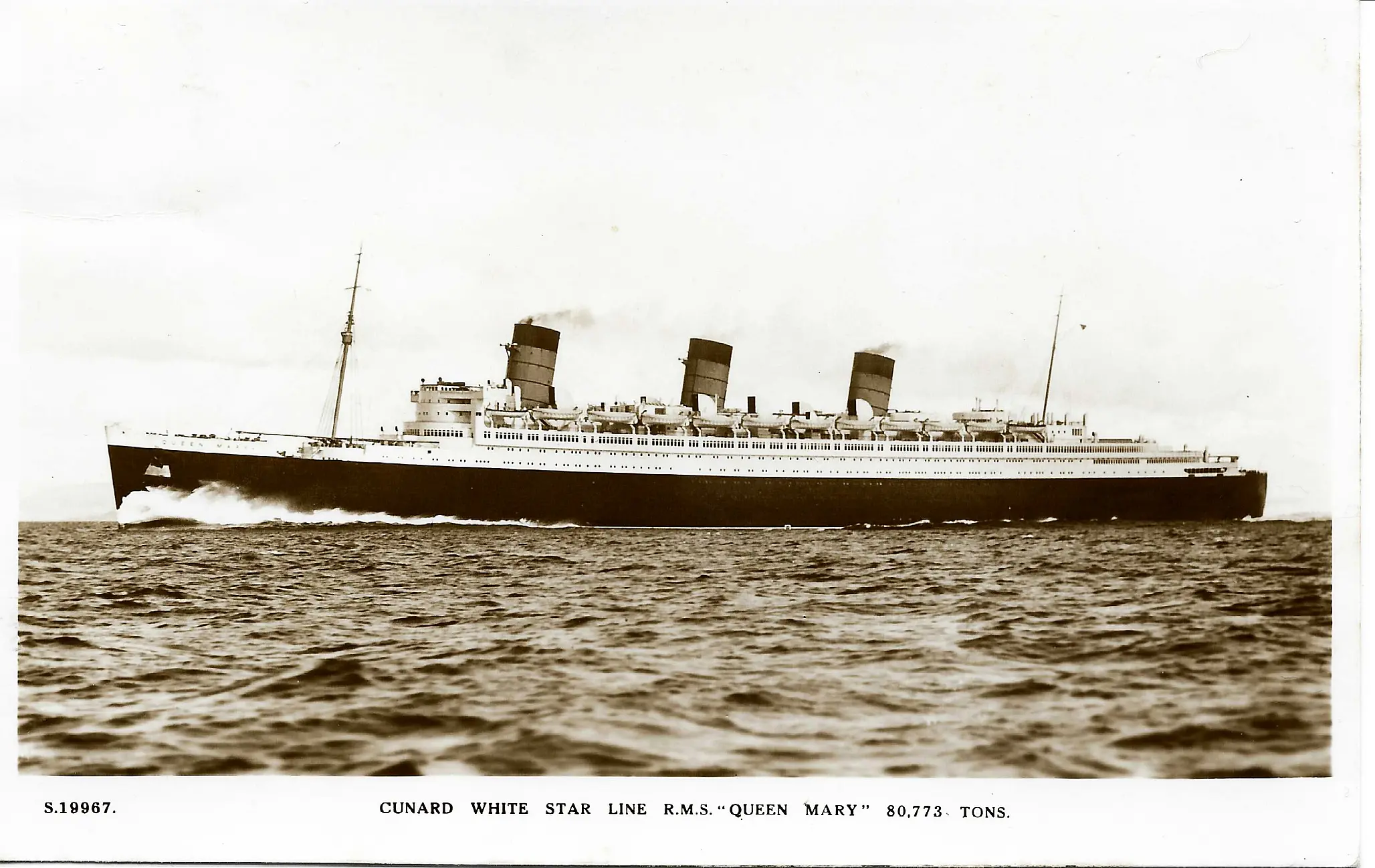
RMS Queen Mary: Postcard in the Vintage Transport Collection.
Click image to enlarge
Reverse of Postcard: postmark 20 July 1937
Cunard-White Star Line R.M.S. “Queen Mary”
Launched by H.M. Queen Mary Sept 26 1934
Length 1018 feet —– Beam 118 feet.
Height Keel to top of Superstructure 135 feet.
Height Keel to top of Forward Funnel 180 feet.
Height Keel to top of Mast Head 234 feet.
Tonnage 80,773 —– 12 Decks.
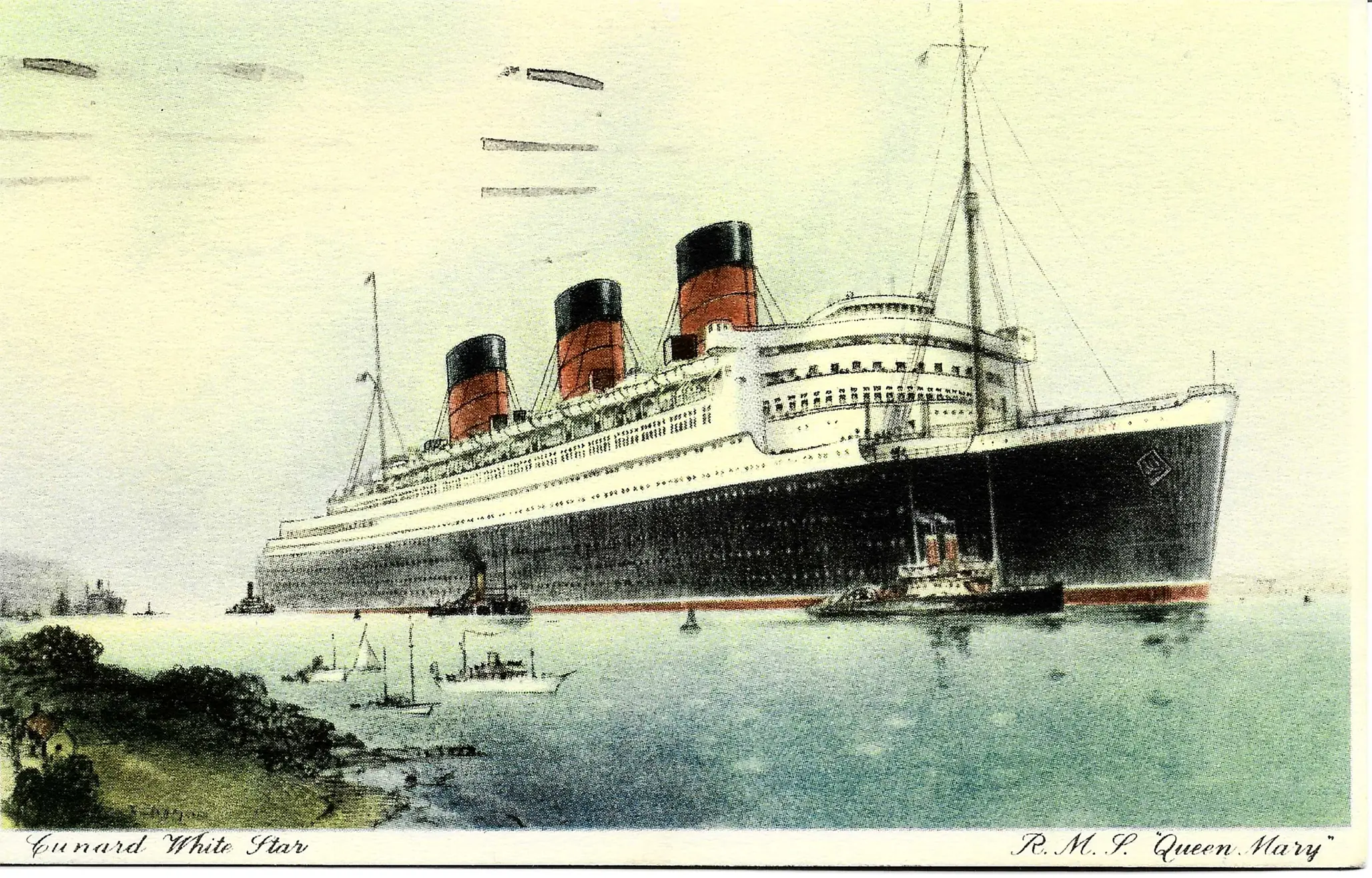
The RMS Queen Mary: Postcard in the Vintage Transport Collection.
Click image to enlarge
Reverse of Postcard: postmark 15 September 1937
Video created Oceanliner Designs #
History #
- 1 December 1930: Construction begins on Job #534 at John Brown & Company in Clydebank, Scotland, though the Great Depression halts work for over two years before a government loan saves the project.
- 26 September 1934: H.M. Queen Mary officially launches and christens the vessel after herself.
- 24 March 1936: Leaving Clydebank for the open sea, the massive liner briefly runs aground twice in the River Clyde before reaching Gourock.
- 19 April 1936: During speed trials off the Isle of Arran, British Olympic gold medallist Lord Burghley sprints one 400 yard lap around the Promenade Deck in full evening dress in under 60 seconds.
- 27 May 1936: She departs Southampton on her maiden voyage to New York, earning the nickname the Ship of Woods for the more than 50 rare wood veneers lining her Art Deco interiors.
- August 1936 and August 1938: She captures the coveted Blue Riband for the fastest transatlantic crossing, loses it to the French liner Normandie in 1937, and reclaims it in 1938, holding the record for 14 years.
- March 1940: Requisitioned for World War II, she is stripped of luxury furnishings, painted camouflage grey (becoming the Grey Ghost), and converted into a troopship.
- 2 October 1942: Zig-zagging to evade U-boats off the Irish coast, she accidentally slices through her own escort cruiser, HMS Curacoa, sinking it with the loss of over 330 lives while forbidden by wartime orders from stopping to rescue survivors.
- 25 July 1943: She sets an all-time record for the most people ever carried on a single vessel, cramming 16,683 troops and crew aboard for an Atlantic crossing.
- 31 July 1947: Following a ten month postwar refit to restore her luxury fittings, she resumes commercial passenger service. 8417* 1958: She receives underwater stabilisers to tame her notorious rolling in rough seas, the same year BOAC launches transatlantic jet flights, spelling the beginning of the end for ocean liners.7
- 31 October 1967: Retired after 1,001 transatlantic crossings and sold to the City of Long Beach, California, for $3.45 million, she departs Southampton on a 39 day farewell voyage around Cape Horn because she is too wide for the Panama Canal.
- 11 December 1971: Permanently moored in Long Beach, she opens to the public as a maritime museum, followed by the opening of her onboard Art Deco hotel in November 1972.